The Natural Fibre Library: Every Yarn We Knit, and How to Choose Yours
Frost on the gate. A dog waiting by the back door. Someone reaches past four jumpers and pulls out the fifth, the one that always seems to work, and nobody in the house could really explain why that particular one keeps winning.
Shape is rarely the reason. Colour is not it either, if we are being honest with ourselves. The difference between a garment worn weekly and one worn twice a season sits in the yarn, and yarn is the part almost nobody examines at the moment of buying.
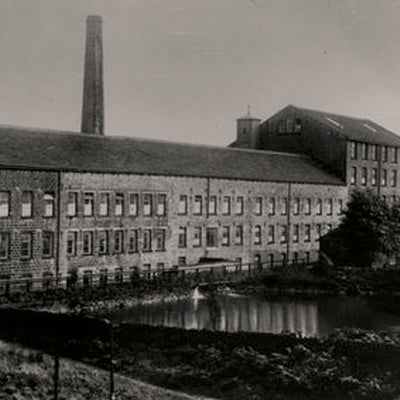
Since 1976 our knitwear has been made in our own family factories, first in Leicestershire and later in India, which means the yarn decision sits with us rather than with a supplier we have never met. Five decades on, that shelf has grown into something close to a library. Around ten regular entries. One or two seasonal guests who come and go. Every one of them held for a job.
What follows is the working catalogue. Where each yarn comes from, who spins it, and the garment it was chosen to become.
How a Yarn Earns a Place in Our Library
We add slowly, and probably too cautiously. A cone can look beautiful on the rack and still fail on the knitting floor, usually in one of four dull ways: it drops its shape after three wears, it pills along the cuff, it takes dye unevenly, or it costs more than the finished piece can honestly carry.
The four questions we ask before knitting begins
-
Is it a single natural fibre, or does it genuinely need blending? Blending is fine when the reason is structural, merino with a small percentage of cashmere being the obvious case. Less fine when the reason is simply cost.
-
Who spins it, and for how long have they done so? Provenance means a mill name and a founding date. A country printed on a swing tag tells you almost nothing.
-
What gauge does the fibre want? Some yarns ask for 5 gauge and real weight. Others want fineness and trapped air. Pushing one into the other seldom ends well.
-
Will it still exist in ten years? A yarn we cannot reorder is a yarn we cannot mend a customer's jumper with.
Each candidate gets knitted into a sample, then washed, worn and tested by people who work in the building. A few are quietly dropped after one season. That part tends not to appear in anyone's marketing.
There is a mechanical limit as well. Our commercial grade knitting machines apply real tension, and a fibre that frays under it is no use to us however lovely it feels in the hand.
The Wool Shelf: What Each Yarn Is Actually For
Animal fibres carry most of the load through a British autumn and winter. They vary far more than the single word "wool" would suggest, and treating them as interchangeable is how people end up disappointed.
British spun lambswool
Lambswool comes from a sheep's first shearing, at roughly seven months, and that opening fleece holds a springiness the animal never quite regains. Ours is spun in Yorkshire by Z. Hinchliffe & Sons, established 1766. Not a detail invented for atmosphere.
Of everything on the shelf, this is the most forgiving. Warm without bulk. Rich when dyed, with the slight heather depth that flat synthetic colour cannot copy. Tolerant of being crushed into a bag on Friday and worn again on Saturday.
-
Best for: crew necks, v necks, cardigans, the everyday winter layer
-
Character: mid weight, mid gauge, high recovery
-
Watch for: it is not the softest yarn we hold, and anyone expecting cashmere will notice within a minute
Have a look at the men's lambswool knitwear collection if this is the register you want. Weighing it against merino? We set the two side by side in our lambswool and merino wool comparison.
Extra fine merino wool
Fineness in wool is measured in microns, one thousandth of a millimetre, and extra fine merino sits below roughly 18.5. That number matters more than any adjective on a label, because fibre diameter is what decides whether a jumper feels soft or prickly against bare skin. Ours is Italian spun, by Zegna Baruffa, established 1850, or Filivivi, established 1817.
The fibre crimps and expands as you move, forming small pockets of trapped air that insulate while still letting moisture out. Which is the reason a fine merino layer works on a cold platform at seven in the morning and again in an overheated meeting room at eleven.
-
Best for: layering, travel, office knitwear, anything worn next to skin
-
Character: lightweight, fine gauge, quietly formal
-
Watch for: on its own it will not carry you through deep January
Worth knowing at the other end of a garment's life: research published by Woolmark found that 100% merino fabric biodegraded by around 95% after fifteen weeks buried in soil, while the International Wool Textile Organisation reports near complete degradation after roughly six months in the ground. Synthetic knitwear does no such thing.
Start with the men's extra fine merino wool jumpers.
Chunky merino wool
Same animal, entirely different intent. This yarn is spun in Peru from Andean merino, then knitted at 5 gauge in Leicestershire, and it exists for the coldest eight weeks of the year.
Heavier yarn holds structure, which is why cable patterns, aran styling and fisherman ribs all live here rather than in the fine gauge ranges. The stitch has room to stand up. You can see the craft from across a room, which is not something we say about many things.
-
Best for: cable knits, aran designs, chunky roll necks, weekend and outdoor wear
-
Character: heavyweight, 5 gauge, visible texture
-
Watch for: too warm indoors for many people, and it will not layer under a slim jacket
The chunky merino wool knitwear collection covers the heaviest end of what we make.
British wool
Native British breeds grow a coarser, more lanolin rich fleece than merino, and that is precisely the point. This is the workhorse yarn. Weatherproof in a way finer fibres are not, dense enough to block wind, and honestly a bit stubborn at first wear.
Traditional shapes belong to it: aran cable jumpers, submariners, ganseys with their inherited patterns, the heavy crew necks farmers have worn across England for generations. Give it two winters and it starts to look better than it did new, which reverses the usual order of things.
-
Best for: heritage shapes, outdoor use, garments expected to last decades
-
Character: heavyweight, robust, softens gradually
-
Watch for: least soft against bare skin, so most people layer it over a shirt or fine knit
Everything in men's British wool knitwear is made with that longevity assumption built in.
Cashmere
Cashmere is the downy undercoat of the cashmere goat, combed out in spring rather than shorn, and the scarcity is genuine rather than manufactured. According to the Sustainable Fibre Alliance, an adult goat yields on average a little over 110 grams per growing season, and baby cashmere at around 13.5 microns produces roughly 30 grams in a full season. Several animals, then, for one jumper.
Ours is spun by Todd & Duncan in Scotland, established 1867, where the soft water of Loch Leven has been part of the finishing process for over a century and a half. Lightweight, extremely warm for its weight, and it improves across the first year as the fibres settle.
-
Best for: fine gauge jumpers and roll necks, scarves, pieces kept for years
-
Character: very fine, light, soft
-
Watch for: it pills more readily than lambswool and asks to be washed with care
Compare the two properly before committing, since the decision is usually cashmere against merino rather than cashmere against everything: our merino wool versus cashmere guide does that side by side. The men's cashmere knitwear collection men's cashmere knitwear collection sits at the fine end of our range.
The blended yarns: merino cashmere and merino silk
Two blends have earned permanent shelf space. A 90% ultra fine merino and 10% cashmere yarn, spun by Papi Fabio, established 1890, gives most of cashmere's handle with wool's structure and recovery. A 70% superfine merino and 30% silk yarn from the same spinner resists creasing, which sounds like a small thing until you have travelled in it.
Both exist because of what they do mechanically, not because blending stretches the budget.
The Plant Shelf: Where Cotton Belongs in a Knitwear Wardrobe
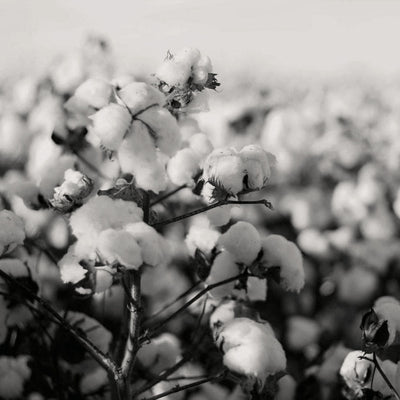
Cotton gets treated as the warm weather default, and that is roughly right, though it undersells what a good knitted cotton can do in spring and early autumn. We make our cotton knitwear in our India factory using locally sourced cotton, with no middlemen between the field and the finished garment.
Supima cotton
Supima is extra long staple American cotton, with fibres of at least 1 3/8 inches, and the Supima Association reports it accounts for under 1% of world cotton production. Length is the whole story here. Longer staples spin into finer, stronger yarns with fewer loose ends, which is why Supima resists pilling, holds colour through repeated washing, and grows softer rather than shabbier.
-
Best for: knitted t-shirts, polo shirts, lightweight jumpers
-
Character: smooth, strong, colourfast
-
Watch for: it is a genuinely warm weather fibre and offers little insulation
The men's Supima cotton collection is where our finest cotton pieces sit.
Ultra fine and mercerised cotton
Mercerising treats the plant fibre so it swells and straightens, taking on a faint lustre and accepting dye more deeply. In practice this gives a knitted polo or short sleeve piece a cleaner drape than raw cotton manages, without the shine of a synthetic.
Ultra fine cotton, meanwhile, is our answer to the awkward months. April and September, when wool is too much and a t-shirt is not enough.
Organic cotton linen
A seasonal guest rather than a permanent resident. Linen brings a dry handle and a slightly irregular surface, and blended with organic cotton it makes summer knitwear that creases the way natural fabric should. Some people dislike that. Others buy it precisely for the texture.
Matching yarn to garment, gauge and season
|
Yarn |
Spun by |
Weight |
Typical garments |
Season |
|
British spun lambswool |
Z. Hinchliffe & Sons, Yorkshire |
Midweight |
Crew necks, cardigans, v necks |
Autumn to spring |
|
Extra fine merino wool |
Zegna Baruffa or Filivivi, Italy |
Lightweight |
Layering knits, office pieces, travel |
All year |
|
Chunky merino wool |
Peruvian spun, knitted in Leicestershire |
Heavyweight |
Cable and aran styles, roll necks |
Deep winter |
|
British wool |
British breeds |
Heavyweight |
Ganseys, submariners, aran cables |
Winter, outdoors |
|
Cashmere |
Todd & Duncan, Scotland |
Lightweight |
Fine jumpers, roll necks, scarves |
Autumn to spring |
|
Merino cashmere and merino silk |
Papi Fabio, Italy |
Lightweight |
Office knitwear, travel layers |
Autumn to spring |
|
Supima cotton |
US grown, spun for fine counts |
Lightweight |
T-shirts, polo shirts, fine jumpers |
Spring and summer |
|
Ultra fine and mercerised cotton |
Locally sourced, India |
Ultra fine |
Short sleeve knits, polos |
Spring and autumn |
Reading a composition label without being fooled
A short checklist, learned mostly from being asked awkward questions by customers who knew their stuff:
-
Look for a percentage, not an adjective: "Wool blend" can mean 20% wool. It often does.
-
Ask about ply: Two ply cashmere behaves nothing like single ply cashmere at the same price point.
-
Check whether the mill is named: Brands that know their spinner will tell you. Brands that do not, will not.
-
Note the gauge: A 5 gauge chunky knit and a 30 gauge fine knit are different products even in identical fibre.
-
Read the care instructions before buying, not after: Our merino wool care guide covers the washing and drying that keeps natural yarns in shape.
One more thought, slightly tangential. Wool resists odour naturally, so the honest advice is to wash less than instinct suggests. Airing a jumper overnight does more good than a cycle in the machine, and your knitwear will last longer for it.
Frequently Asked Questions
Which natural yarn is warmest for its weight?
Cashmere delivers the most warmth per gram, which is why a fine cashmere roll neck feels almost weightless while insulating well. For sheer insulating power in absolute terms, chunky merino wool and heavyweight British wool win, because there is simply more fibre and more trapped air in the garment. The practical choice depends on whether you need warmth under a coat, where cashmere or fine merino works better, or warmth as the outer layer.
Can merino wool be worn directly against the skin?
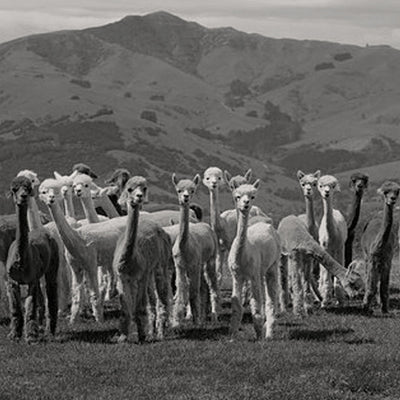
Yes, for most people. Extra fine merino measures below roughly 18.5 microns, and fibres at that diameter bend against skin instead of pressing into it, which is what causes the prickle associated with coarse wool. Anyone with a true lanolin allergy should still take care, since that is a separate issue from fibre diameter. Alpaca, which contains no lanolin, is often recommended in those cases.
How many jumpers does one cashmere goat produce?
Fewer than most shoppers assume. The Sustainable Fibre Alliance reports an average adult goat yields a little over 110 grams of fibre per growing season, and a good deal of that is lost during dehairing, when coarse guard hairs are separated from the soft undercoat. A single adult jumper typically needs the annual output of several animals. That constraint, rather than branding, honestly explains cashmere pricing.
Does natural fibre knitwear really biodegrade?
It does, under the right conditions. Woolmark research found 100% merino fabric biodegraded by roughly 95% after fifteen weeks buried in soil, and the International Wool Textile Organisation reports near complete breakdown at around six months. Wool is keratin, the protein in human hair, so soil microorganisms recognise it as food and release nitrogen and sulphur back into the ground. Polyester and acrylic do not break down in any comparable timeframe.
What is gauge, and why does it change how a jumper feels?
Gauge counts needles per inch on the knitting machine, so a low number means thick yarn and open structure, while a high number means fine yarn and dense fabric. A 5 gauge chunky knit shows cable and aran patterns clearly and carries real weight. A 30 gauge fine knit sits close to the body and layers under tailoring. Identical fibre, knitted at different gauges, produces genuinely different garments.
Choosing from the shelf
Nobody needs all ten yarns. Most well used wardrobes settle on three or four: something fine for layering, something midweight for ordinary cold, something heavy for the worst of it, and a cotton piece for the months in between.
If you are not sure which of those you are short of, our team knows the collection well, and would rather point you to the right yarn than the most expensive one. Contact the Paul James Knitwear sales team for advice on fibre, gauge and sizing, or to talk through a piece you already own and want to match. We are a family business making knitwear in our own factories, and that conversation is one of the more useful parts of the job.