
How to Fold a Turtleneck: The Complete Guide
Wondering how to fold a turtleneck without stretching the neck or creating wrinkles? The right folding technique keeps your knitwear looking sharp, saves space, and extends its lifespan. Whether you're storing a roll neck sweater in a drawer, packing knitwear for travel, or simply trying to prevent sweater wrinkles for good, here's the simplest method you can follow in seconds.
Over the years, we've refined several tips that make turtleneck-folding - and storing knitwear properly in general - far more straightforward than it looks. Before you know it, you'll be folding a sweater with the same confidence as a seasoned stylist.
THE SHORT ANSWER
Folding a turtleneck properly involves laying it flat, folding the sides inward, tucking the sleeves neatly, and rolling or folding it into a compact shape to prevent wrinkles and stretching. This method keeps the collar structured, protects delicate knitwear fibres, and saves space in drawers or luggage - making it the recommended technique for cashmere, merino wool, and cotton blends alike.
QUICK ANSWER: HOW TO FOLD A TURTLENECK
-
Lay the turtleneck flat on a clean, smooth surface
-
Fold both sides inward toward the centre (approx. two-thirds of the width)
-
Fold each sleeve down to the shoulder seam, then back up
-
Roll from the bottom up tightly for travel, or fold flat for drawer storage
How to Fold a Turtleneck Step by Step

Follow these five steps to fold any roll-neck or turtleneck sweater cleanly, whether it's a lightweight cotton-blend or a heavier cashmere piece. As shown below, the process creates a compact rectangle that's ideal for drawer stacking or packing.
Step 1: Lay the Turtleneck Flat
Place your turtleneck face down on a clean, flat surface. Smooth out the fabric with your hands, straighten the sleeves, and ensure there are no hidden folds or bunches beneath the garment before continuing.
Step 2: Fold the Sides Inward
Take one side of the turtleneck and fold it inward toward the centre, creating a sharp crease along the fold. Experts recommend the inward fold covers approximately two-thirds of the total width of the garment. This method works equally well when folding a sweater or a roll-neck.
Step 3: Repeat on the Other Side
Repeat with the opposite side, ensuring both sides meet evenly at the centre crease. You should now have a symmetrical, long rectangular shape with the collar visible at the top. This creates a neat fold that holds its structure well in drawer storage.
Step 4: Tuck and Fold the Sleeves
Fold each sleeve downward toward its respective shoulder seam, then fold it back upward toward its original position. This creates a clean crease along the armhole opening, making the shirt easier to store and preventing wrinkles from forming - one of the most effective ways to store knitwear properly over time.
Step 5: Roll or Fold from the Bottom Up
To finish, roll the turtleneck from the bottom hem up to the collar, keeping the roll tight and compact. Alternatively, fold it flat in thirds for drawer storage. The roll method is ideal for travel, as it minimises space and keeps the neck area uncompressed.
If you're also wondering how to wear a turtleneck for different occasions, see our styling guide for roll necks and fine-knit sweaters.
Best Way to Fold a Turtleneck: Method Comparison
Not sure whether to fold, roll, or hang your turtleneck? The table below outlines each storage method, its ideal use case, and the trade-offs involved - particularly for delicate materials like merino wool or cashmere.
|
Method |
Best For |
Pros |
Cons |
Recommended Fabrics |
|
Flat Folding |
Drawer or shelf storage |
Keeps shape; easy to stack; collar stays structured |
Takes more drawer space than rolling |
Cashmere, merino wool, cotton blends |
|
Rolling |
Travel & packing |
Saves significant space; minimises wrinkles in transit |
Less structured; collar can lose shape over time |
Cotton blends, lightweight knits |
|
Hanging |
Short-term display only |
Easy access; garment breathes well |
Stretches the neck and shoulder area; can distort shape |
Not recommended for knitwear |
Should You Fold a Turtleneck In or Out?
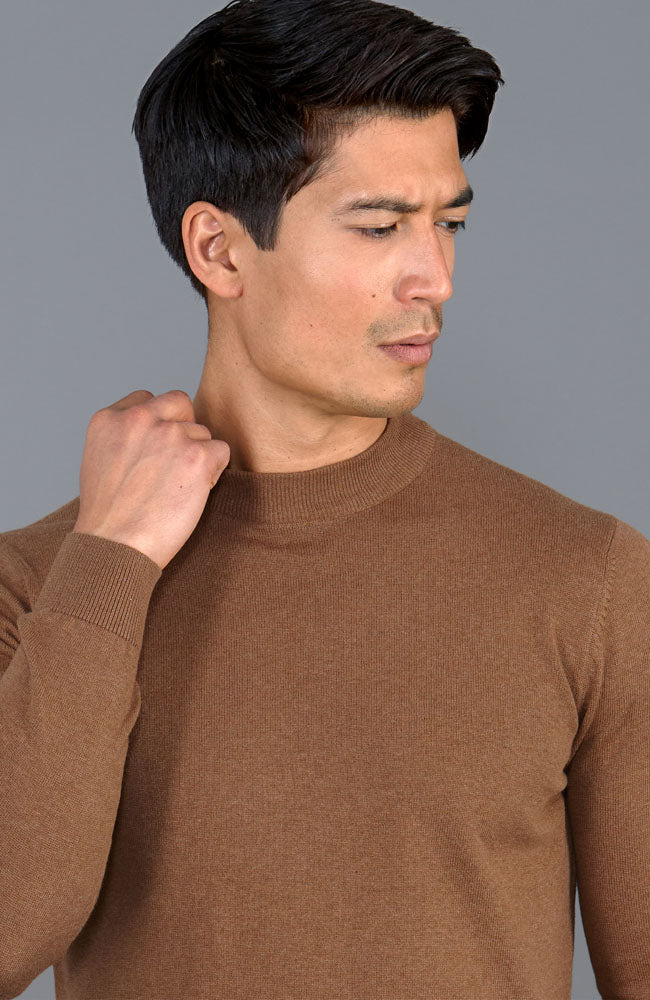
There are no hard rules for whether to fold turtlenecks in or out - both work, and the choice largely comes down to how you plan to store or display the piece.
Fold In
If you opt to fold the turtleneck inward, start by folding the sleeves inward, then the sides, and finally the collar. This gives you a compact fold that's ideal for storing in drawers, suitcases, or any tight space. It's the preferred method for storing knitwear properly in a wardrobe with limited room.
Fold Out
If you want to display your turtlenecks on an open shelf or garment rack, folding outward creates a crisper, more visual finish. Fold the sleeves outward, tuck in the sides, and fold down the collar. This method works especially well for heavier pieces where the collar has enough structure to hold its shape.
Tip: For a more structured, sophisticated look, fold your turtleneck inward. For a relaxed, casual aesthetic, fold it outward. If you want maximum volume and definition - especially with chunky knits - scrunch rather than fold.
Should You Fold or Hang a Turtleneck?
Fashion-savvy storage experts consistently agree: folding is the best way to store a turtleneck. Hanging a roll neck or turtleneck sweater on a standard hanger causes the neck and shoulder area to stretch over time, as the weight of the garment pulls downward on the collar. This is especially damaging to fine materials like cashmere and merino wool.
If hanging is unavoidable, use thick padded hangers to distribute weight across the shoulders and reduce the risk of distortion. For any long-term storage, folding and placing in a drawer or on a shelf is strongly preferred.
Curious about the difference between a roll neck and a polo neck? See our guide on roll neck vs polo neck - including how fabric choice affects storage decisions.
Is It Okay to Store a Folded Turtleneck in a Drawer?
Yes - folding a turtleneck correctly and storing it flat in a drawer is the ideal long-term option for preventing stretching or warping. Always fold with the right side facing outward so the collar remains upright after folding.
-
Place tissue paper or a thin layer of fabric between sweaters to prevent matting and maintain shape
-
Avoid storing near direct sunlight or heat sources, as this causes fading and can damage natural fibres like wool and cashmere
-
Never store knitwear in a damp or humid environment - this encourages mould or mildew growth, particularly in natural fibres
-
For long-term seasonal storage, use breathable cotton garment bags rather than airtight plastic containers
How to Fold a Turtleneck for Travel
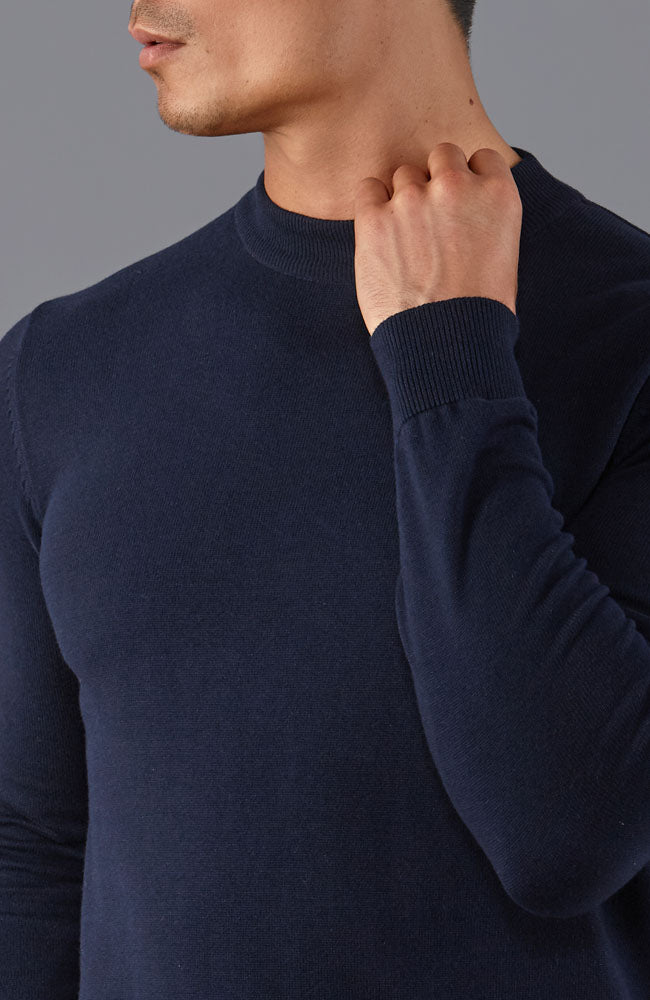
Travelling with a turtleneck or roll neck sweater doesn't have to mean arriving with a wrinkled mess. Whether you're packing cashmere for a business trip or a cotton blend for a weekend away, the following techniques will help you pack knitwear without the creases.
Roll Instead of Folding
For travel, rolling is generally preferred over flat folding. Roll your turtleneck gently but firmly from the bottom hem upward, keeping the right side facing outward so the collar stays upright. This is the most effective way to prevent sweater wrinkles in a suitcase.
Pack Smaller Items Inside the Roll
Maximise packing efficiency by tucking lightweight items - socks, underwear, or scarves - inside the rolled turtleneck. This fills the hollow centre of the roll and prevents it from shifting during transit.
Additional Travel Packing Tips
-
Use a zip-lock or packing bag to protect the garment from moisture and dirt during travel
-
Choose wrinkle-resistant materials where possible - cashmere, merino wool, and cotton blends all travel well
-
Never compress the neck area - folding or squashing the turtleneck collar directly causes long-term distortion
-
Use tissue paper between layers to prevent rubbing and reduce the chance of pilling on finer knitwear
-
Pack turtlenecks last, on top of heavier items, so they're not crushed under additional weight
-
Hang immediately on arrival - if your hotel has hangers, let the sweater breathe and any travel creases will naturally release
-
Use garment bags for delicate or fine-knit pieces, especially cashmere or merino wool turtlenecks
-
Pack seasonally - heavyweight fleece turtlenecks are better suited to a carry-on bag, while lightweight knits pack flat into a suitcase
-
Bring accessories like scarves and jewellery to create multiple looks from a single turtleneck
Note on Fabric: The material of your turtleneck plays a major role in how it responds to folding and travel. Cashmere and merino wool are natural fibres that are both incredibly soft and surprisingly resilient when folded correctly - but they require more care than synthetic blends. Cotton turtlenecks are the most forgiving and easiest to fold or roll without risk of damage. If you're unsure, always handle natural fibre knitwear gently and avoid over-compressing.
Buy Men's Turtleneck Jumpers | Women's Turtleneck Jumpers
Related Articles:
- Are turtlenecks business casual?
- How to wear a roll neck?
- How to wear a turtleneck?
- Roll Neck Vs Polo Neck Vs Turtleneck