How To Style A Turtleneck: The Complete Men's Guide
Quick Answer: How To Style A Turtleneck
Style a turtleneck by pairing it with tailored trousers and loafers for smart-casual looks, layering under blazers or suits for formal occasions, or combining with dark denim and Chelsea boots for casual wear. Choose slim-fit styles in merino wool or cashmere, ensure the neck sits comfortably without bunching, and select neutral colours like black, navy, or charcoal for maximum versatility. The key is proper fit-the fabric should skim your body without clinging, whilst the neckline should fold naturally without creating bulk.
What serves as the winter equivalent of a classic black t-shirt? The turtleneck sweater stands as perhaps the most versatile foundational piece for cold-weather dressing. This timeless garment provides essential warmth whilst adding instant sophistication to any outfit, from weekend casual to business formal contexts.
Fashion icons like Steve Jobs, who famously adopted the black turtleneck as his signature look, demonstrated how this simple garment can become a powerful style statement. Designers from Tom Ford to Raf Simons have repeatedly featured turtlenecks in their collections, cementing this piece's position in contemporary menswear. Understanding how to style a turtleneck properly unlocks numerous outfit possibilities throughout the autumn and winter seasons.
Understanding Turtleneck Styles and Variations

Classic Ribbed Turtleneck
Traditional ribbed turtlenecks feature vertical texture that creates subtle visual interest whilst providing excellent stretch and recovery. These styles work brilliantly for both casual and formal applications, particularly when crafted from fine-gauge merino wool or cashmere. The ribbing helps maintain collar structure throughout wear, preventing the dreaded collapse that cheaper versions suffer.
Brands like John Smedley and Sunspel have perfected the construction of ribbed turtlenecks, using high-quality materials and precise knitting techniques. Their pieces maintain shape after repeated wear and washing, justifying higher price points through superior longevity and appearance.
Mock Neck Alternatives
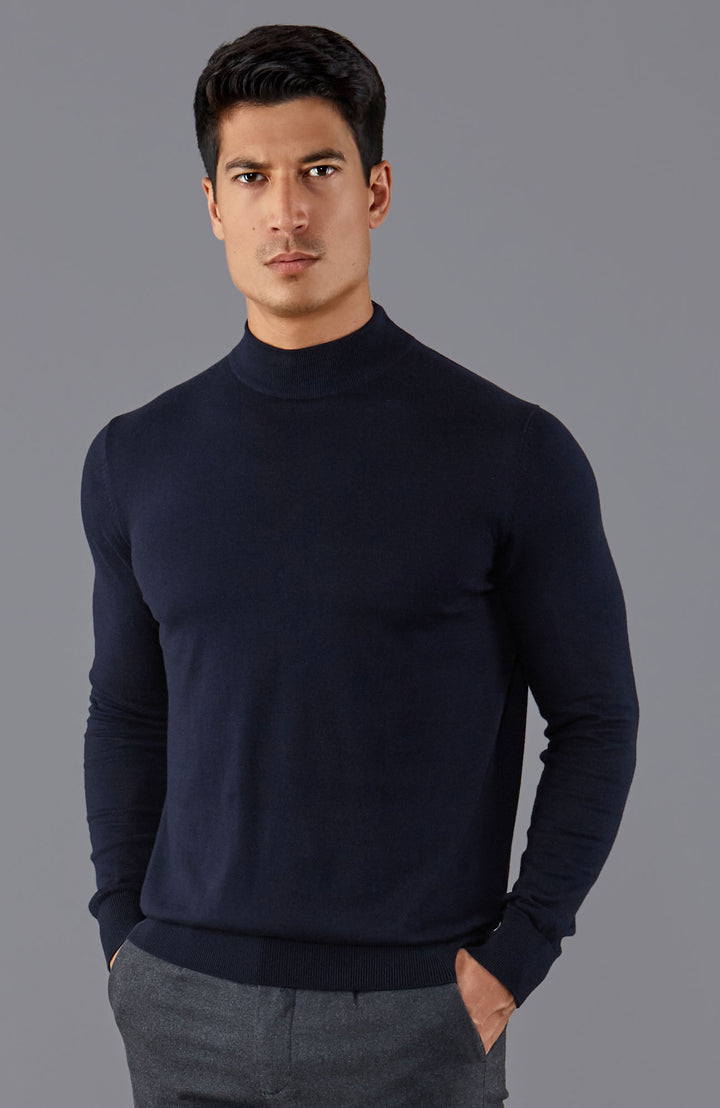
Mock necks provide similar styling benefits with slightly less coverage, typically standing one to two inches rather than folding over. These variations suit men who find traditional turtlenecks too restrictive or warm for their climate. The lower profile works particularly well under blazers where excessive fabric bulk around the neck might create unflattering proportions.
Contemporary brands like COS and Uniqlo offer excellent mock neck options at accessible price points, making them ideal starting points for those new to this neckline style.
Chunky Roll Neck Sweaters
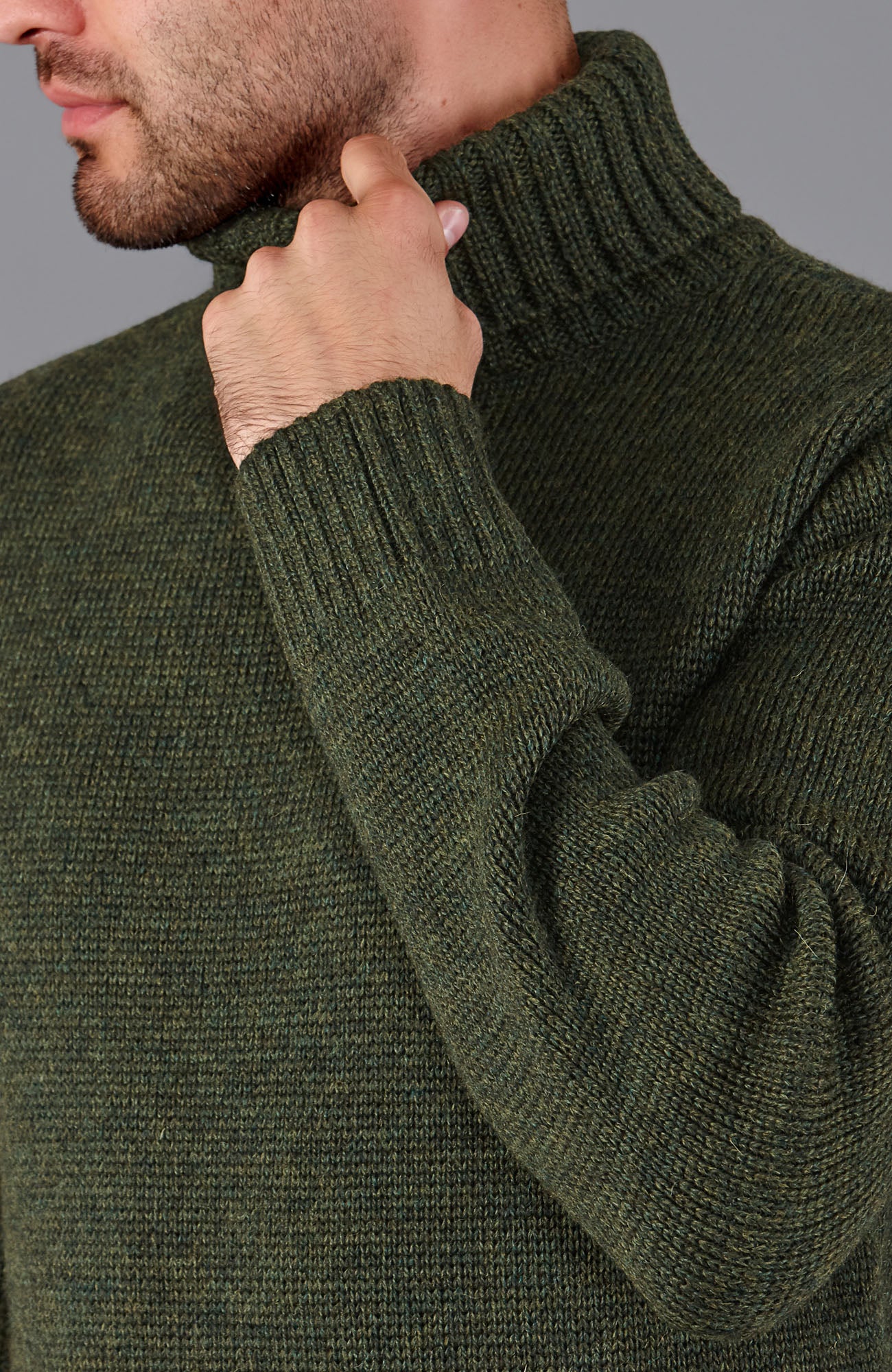
Heavier-gauge turtlenecks in chunky knits create relaxed, texture-rich looks perfect for weekend casual wear. These substantial pieces often feature cable knits, waffle textures, or fisherman stitches that add visual depth. The extra weight provides excellent warmth for outdoor activities whilst maintaining sophisticated appearance.
Drake's and Anderson & Sheppard produce exceptional chunky turtlenecks that balance substantial construction with refined finishing details, elevating casual knitwear into investment-worthy pieces.
Essential Fit Guidelines for Turtleneck Success
Body Proportion Considerations
Proper turtleneck fit requires attention to several key measurement points. The shoulder seam should sit precisely at your natural shoulder point, creating clean lines that support rather than distort your frame. Body width should allow comfortable movement without excess fabric pooling at the sides when arms are lowered.
Broader-chested men benefit from turtlenecks with slightly wider neck openings that don't create excessive fabric compression around the chest area. Conversely, slimmer builds often look best in more fitted styles that create clean, streamlined silhouettes without appearing oversized.
Neckline Height and Comfort
The collar should fold naturally once, creating approximately two to three inches of coverage above the base neckline. Too much fabric creates unflattering bunching, whilst insufficient height prevents proper folding, resulting in a mock neck appearance rather than true turtleneck styling.
Quality construction ensures the neckline maintains its structure throughout wear without stretching excessively. Cheaper turtlenecks often lose collar integrity after several wears, creating sloppy appearance that undermines otherwise good outfits.
Sleeve Length Precision
Sleeves should reach your wrist bone when arms hang naturally, allowing approximately half an inch of movement without exposing excessive forearm. When layering under jackets, slightly shorter sleeves prevent bunching at the wrists whilst maintaining clean lines through the arms.
Best Turtleneck Outfit Combinations
Smart-Casual Office Styling
Turtleneck + Blazer + Chinos + Loafers Pair a fine-gauge navy turtleneck with a structured grey blazer, tailored stone chinos, and brown suede loafers for polished business-casual appearance. This combination works excellently for creative industries, casual Fridays, or modern offices with relaxed dress codes.
Turtleneck + Sports Coat + Dress Trousers + Oxford Shoes Combine a charcoal merino turtleneck with a tweed sports coat, grey flannel trousers, and burgundy oxford shoes for sophisticated autumn styling. Add a wool overcoat for outdoor transitions between locations.
Formal Occasion Approaches
Turtleneck + Suit + Dress Shoes Replace traditional dress shirts with black turtlenecks under navy or charcoal suits for contemporary formal styling. This approach, popularised by architects and creative professionals, maintains formality whilst demonstrating individual style confidence. Choose fine-gauge cashmere or merino wool for appropriate texture and drape.
Turtleneck + Dinner Jacket + Dress Trousers + Monk Straps For black-tie alternative events, pair a silk or fine cashmere turtleneck with a dinner jacket, creating James Bond-inspired elegance. Daniel Craig's portrayal of 007 brought renewed attention to this combination, making it acceptable in formerly traditional contexts.
Weekend Casual Combinations
Turtleneck + Denim Jacket + Dark Jeans + Chelsea Boots Layer a chunky cream turtleneck under a dark denim trucker jacket, combining with black jeans and suede Chelsea boots for effortless weekend style. This outfit bridges smart and casual aesthetics perfectly for relaxed social occasions.
Turtleneck + Bomber Jacket + Chinos + Sneakers Combine a fitted black turtleneck with a leather bomber jacket, olive chinos, and white leather sneakers for contemporary casual styling. This combination demonstrates how turtlenecks work within streetwear-influenced contexts whilst maintaining sophistication.
Turtleneck + Overcoat + Tailored Trousers + Leather Boots Wear a ribbed grey turtleneck under a camel overcoat with charcoal trousers and brown leather boots for classic autumn styling. This timeless combination never fails to look polished and intentional.
Layering Strategies
Under Cardigans Fine-gauge turtlenecks work beautifully under open cardigans, creating textured layering that adds depth to simple outfits. Choose contrasting colours-navy turtleneck under cream cardigan, or black under charcoal-for visual interest.
With Gilets and Vests Turtlenecks provide ideal base layers for gilets and quilted vests, combining warmth with clean necklines that don't require additional scarves. This approach works particularly well for outdoor activities or casual country styling.
When To Wear Turtlenecks: Occasion Guide
Professional Business Environments
Creative industries, tech companies, and modern professional services increasingly welcome turtlenecks as alternatives to traditional dress shirts. Architecture firms, design studios, and media companies particularly embrace this styling approach. However, conservative finance, law, and corporate environments might still require traditional shirting, making turtlenecks suitable only for casual Friday or after-hours events.
Social and Evening Events
Cocktail parties, gallery openings, dinner parties, and cultural events provide excellent opportunities for turtleneck styling. The clean neckline photographs well and demonstrates style awareness without appearing overly formal or stuffy. Choose quality fabrics and ensure impeccable fit for these visibility-heavy occasions.
Seasonal Appropriateness
Turtlenecks naturally suit autumn and winter seasons, typically appearing in wardrobes from October through March in temperate climates. Lightweight cotton or linen-blend versions can extend into spring, particularly during cool mornings or air-conditioned indoor environments.
Common Turtleneck Styling Mistakes To Avoid
Incorrect Size Selection
The most frequent error involves choosing turtlenecks that are either too tight or too loose. Overly tight styles restrict movement and create unflattering bunching around the torso, whilst excessively loose versions appear sloppy and undermine the garment's inherent sophistication.
Poor Fabric Quality
Cheap synthetic turtlenecks lose their shape quickly, pill excessively, and often feel uncomfortable against the skin. Investing in natural fibres-merino wool, cashmere, cotton, or linen- ensures better appearance, comfort, and longevity. The quality difference between £30 and £100 turtlenecks becomes apparent after just a few wears.
Neglecting Neckline Care
Turtleneck collars require careful handling during washing and storage to maintain their structure. Folding turtlenecks rather than hanging prevents collar stretching, whilst proper washing techniques preserve fabric integrity and shape.
Over-Layering
Adding too many layers over turtlenecks creates bulk that appears unstylish and uncomfortable. The turtleneck itself provides substantial coverage, so limit additional layers to single blazers, coats, or lightweight jackets rather than multiple pieces simultaneously.
Ignoring Colour Coordination
Whilst neutral turtlenecks offer maximum versatility, ignoring colour theory when incorporating brighter options leads to clashing combinations. Consider your existing wardrobe colours and choose turtleneck shades that complement rather than compete with your trousers, jackets, and shoes.
Fabric Selection for Different Climates and Uses
Merino Wool Excellence
Merino wool represents the gold standard for turtleneck construction, offering excellent temperature regulation, natural odour resistance, and beautiful drape. Fine-gauge merino creates elegant, dressy turtlenecks suitable for formal contexts, whilst heavier weights provide casual warmth for weekend wear.
New Zealand and Australian merino wool, used by brands like Icebreaker and Rodd & Gunn, provides exceptional quality that justifies premium pricing through superior performance and durability.
Cashmere Luxury
Cashmere turtlenecks offer unmatched softness and lightweight warmth, making them excellent choices for layering under suits or wearing for special occasions. The natural lustre creates a refined appearance appropriate for formal events and professional settings.
Scottish cashmere producers like Johnstons of Elgin and Barrie Knitwear maintain centuries-old traditions whilst incorporating modern sustainability practices, creating heirloom-quality pieces that improve with proper care.
Cotton for Transitional Seasons
Cotton turtlenecks provide breathability for spring and autumn wear when wool might feel too warm. Pima or Egyptian cotton varieties offer superior softness and durability compared to standard cotton, creating pieces that maintain their appearance through repeated washing.
Synthetic Blends for Performance
Modern synthetic blends incorporating elastane or polyester provide stretch and shape retention that pure natural fibres can't match. These technical fabrics work well for active lifestyles or situations requiring frequent washing, though they typically lack the luxury feel of pure wool or cashmere.
Styling Turtlenecks for Different Body Types
Athletic Builds
Muscular or athletic builds benefit from fitted turtlenecks that showcase the physique without appearing tight. Choose styles with slight stretch content that accommodate chest and shoulder width, whilst tapering through the waist. Avoid overly loose fits that hide your natural shape.
Slim Frames
Slimmer builds often look excellent in both fitted and slightly oversized turtleneck styles. Fitted versions create clean, streamlined silhouettes, whilst deliberately oversized chunky knits add visual weight and contemporary styling appeal. The key lies in making the proportion choice appear intentional rather than accidental.
Broader Midsections
Men carrying extra weight around the midsection should choose turtlenecks that are long enough to sit comfortably over the waist without riding up. Darker colours create slimming effects, whilst ribbed textures can either help (vertical ribs) or hinder (horizontal ribs), depending on direction.
Care and Maintenance for Longevity
Proper Washing Techniques
Hand washing remains ideal for turtlenecks, particularly cashmere and fine merino varieties. Use cool water with specialised wool detergent, gently agitating without wringing or twisting. Machine washing works for hardier cotton or wool-blend turtlenecks using delicate cycles and appropriate temperatures.
Drying and Storage Methods
Lay turtlenecks flat on clean towels to dry, reshaping whilst damp to maintain proper proportions. Never hang wet turtlenecks, as this causes stretching and distortion. Once dry, fold carefully and store in drawers or on shelves rather than on hangers to preserve the neckline's structure.
Addressing Common Issues
Pilling occurs naturally with wool and cashmere turtlenecks, but can be managed using fabric shavers or cashmere combs. Address pills regularly to maintain a pristine appearance. Stretched necklines sometimes respond to careful steaming and reshaping, though severe stretching typically indicates the garment has reached its useful life.
Expert Styling Tips from Fashion Professionals

Proportion Balance
Fashion consultant recommendations emphasise balancing turtleneck coverage with the overall proportions of the outfit. The substantial neckline means other elements should maintain clean, uncluttered lines. Avoid adding scarves, bulky necklaces, or excessive collar details from outer layers.
Texture Mixing
Successful turtleneck styling often involves mixing textures-smooth merino under textured tweed, chunky cable knit with sleek leather jacket, or ribbed turtleneck under crisp cotton blazer. These combinations create visual depth and demonstrate intentional styling choices.
Colour Theory Application
Menswear stylists recommend building turtleneck wardrobes around versatile neutral bases-black, navy, charcoal, cream, and grey-before incorporating accent colours. Neutrals provide maximum outfit flexibility whilst requiring less careful coordination with existing wardrobe pieces.
Building Your Turtleneck Collection
Essential First Purchases
Begin with two foundational pieces: one black and one navy fine-gauge merino turtleneck. These colours work with virtually everything in typical men's wardrobes whilst maintaining appropriateness across casual through smart-casual contexts. Quality basics from Uniqlo, COS, or Marks & Spencer provide excellent value whilst establishing whether turtlenecks suit your style preferences.
Expanding Your Options
After establishing baseline comfort with turtlenecks, add grey, cream, and burgundy options for increased styling variety. Consider one chunky casual version for weekend wear and potentially one luxury cashmere piece for special occasions. Building gradually ensures you're investing in pieces you'll actually wear rather than accumulating unused items.
Investment Pieces Worth Considering
John Smedley's fine-gauge merino turtlenecks represent excellent quality at mid-range prices, whilst Loro Piana and Brunello Cucinelli offer exceptional luxury options for those seeking ultimate quality. Drake's provides beautifully constructed pieces with distinctive British styling sensibilities that justify premium pricing through superior materials and craftsmanship.
Turtleneck Style Quick Reference
|
Occasion |
Recommended Outfit |
Fabric Choice |
Key Styling Notes |
|
Business Casual |
Turtleneck + blazer + chinos + loafers |
Fine merino, cashmere |
Keep colours neutral, ensure perfect fit |
|
Formal Event |
Turtleneck + suit + dress shoes |
Cashmere, silk blend |
Choose black or navy, avoid chunky knits |
|
Weekend Casual |
Turtleneck + denim + boots |
Chunky wool, cotton |
Embrace texture, consider layering |
|
Smart Casual |
Turtleneck + sports coat + trousers + brogues |
Merino wool, cotton |
Balance proportions, mind colour coordination |
|
Active Casual |
Turtleneck + bomber + chinos + sneakers |
Merino blend, technical fabric |
Fitted styles work best, darker colours versatile |
Frequently Asked Questions
Should turtlenecks fit tight or loose, and how do I know if the fit is correct?
Turtlenecks should fit closely enough to skim your body without clinging or restricting movement, creating clean lines that look intentional rather than accidental. The correct fit allows you to move your arms freely, sit comfortably, and breathe normally whilst maintaining a tailored appearance. The neckline should sit comfortably against your neck without feeling constrictive-you should be able to insert two fingers between the fabric and your skin when the collar is folded. The shoulder seams must align with your natural shoulder points, as this affects how the entire garment drapes. Body length should reach your hip bone, providing adequate coverage without excessive fabric pooling around the waist. Sleeves should end at your wrist bone, allowing slight movement without exposing forearms excessively. When trying turtlenecks, perform movement tests: raise your arms overhead, sit down, and rotate your torso to ensure the fabric moves with you rather than restricting or riding up. Quality turtlenecks in natural fibres often feel slightly snug initially but stretch slightly with wear to conform to your body shape. If you're between sizes, consider your layering intentions: size up if you'll wear the turtleneck primarily under jackets, or choose your usual size for standalone wear.
Can I wear turtlenecks in professional business environments, and what are the styling rules?
Turtlenecks work in many professional environments when styled appropriately, though their acceptance varies significantly by industry, company culture, and geographic location. Creative industries, including architecture, design, media, technology, and fashion, generally welcome turtlenecks as sophisticated alternatives to traditional dress shirts, particularly when paired with quality blazers, suits, or tailored separates. Conservative sectors like finance, law, and corporate management might reserve turtlenecks for casual Fridays or after-hours events rather than client-facing situations. Geographic considerations matter-European and cosmopolitan environments typically embrace turtlenecks more readily than conservative American business contexts. When wearing turtlenecks professionally, choose fine-gauge fabrics in neutral colours like black, navy, charcoal, or grey rather than chunky knits or bright colours. Ensure impeccable fit without any bunching, pulling, or excess fabric that might appear sloppy. Pair with tailored trousers, quality leather shoes, and structured blazers or suits to maintain appropriate formality levels. The overall outfit should read as intentionally stylish rather than casual or underdressed for your environment. Consider your role and visibility, senior positions or client-facing roles might require more conservative approaches than internal creative positions. Observe workplace norms and start conservatively, perhaps introducing turtlenecks gradually to gauge reception before making them wardrobe staples.
What's the difference between turtlenecks, mock necks, and roll necks, and when should I choose each style?
These related neckline styles offer different coverage levels and styling implications that suit various preferences and occasions. Turtlenecks feature the highest collar construction, typically four to six inches of fabric that folds over once to create the characteristic "turtleneck" appearance with approximately two to three inches of visible coverage above the base neckline. This provides maximum warmth and creates the most distinctive styling statement but can feel restrictive for some wearers. Mock necks stand upright without folding, typically rising one to two inches above the base neckline, offering similar styling benefits with less coverage and bulk. Mock necks work excellently under blazers and suits where excessive fabric might create unwanted volume, and they suit warmer climates or indoor environments where full turtleneck coverage feels excessive. Roll necks represent a broader category that includes both turtlenecks and mock necks, though the term more commonly refers to British-style turtlenecks with slightly lower, more relaxed collars than American versions. When choosing between these styles, consider your climate, layering intentions, and personal comfort preferences. Turtlenecks provide maximum style impact and warmth for cold-weather standalone wear or under open coats. Mock necks offer streamlined alternatives for layering under jackets or for those who find traditional turtlenecks too warm or restrictive. Try each style to determine which feels most comfortable and looks most flattering with your proportions and existing wardrobe. Many men maintain both in their wardrobes for different applications-turtlenecks for casual weekend wear and outdoor activities, mock necks for business-casual office contexts and layering under tailored clothing.
Conclusion
Mastering turtleneck styling requires understanding proper fit, selecting appropriate fabrics for your climate and occasions, and learning which combinations suit your personal style and body type. These versatile garments deserve places in modern men's wardrobes, offering sophisticated alternatives to traditional shirting whilst providing essential cold-weather comfort. Start with quality basics in neutral colours, ensure proper fit through careful sizing, and gradually expand your collection as you develop confidence in wearing this distinctive neckline style.
Shop today Men's Turtlenecks | Women's Turtlenecks
Related Articles:
- The Ultimate Buyer's Guide To Mock Turtleneck Jumpers
- How To Style A Roll Neck
- Buyer's Guide To Roll Neck Jumpers
- History Of Roll Neck Jumpers